
An invoice is the last thing standing between your work and your money.
Most freelancers treat it as an afterthought. They finish a project, throw together a PDF, and wonder why it takes three weeks to get paid. The invoice isn’t just a payment request. It’s documentation. It’s a professional signal. And the way you write it directly affects how fast you get paid.
Here’s what a freelance invoice needs, and how to write one that gets you paid quickly and without questions.
What Every Freelance Invoice Must Include
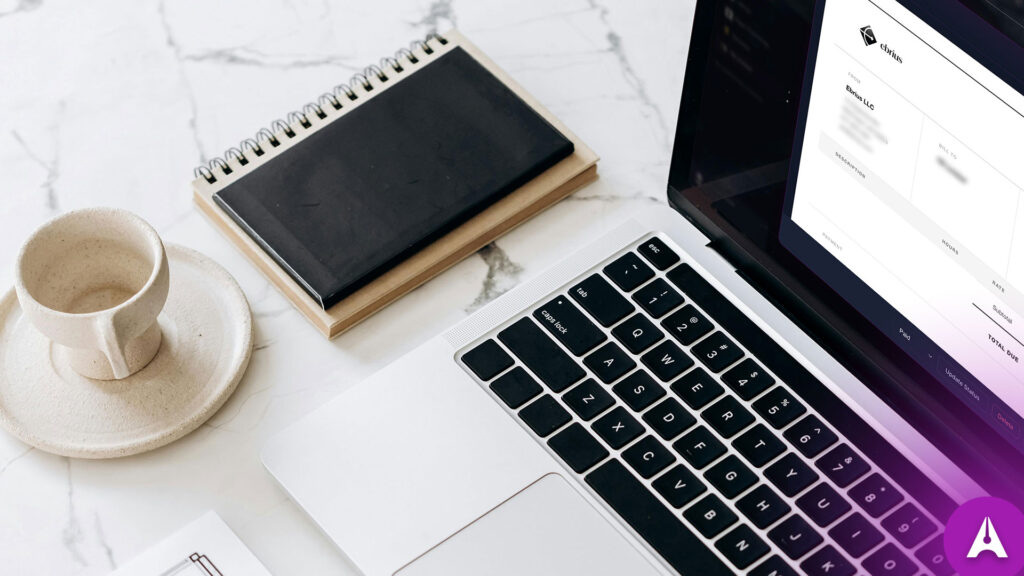
A freelance invoice has required information and optional information. Get the required stuff wrong and you delay payment or create legal ambiguity.
Your information:
- Your full name or business name
- Your address (city and country at minimum)
- Your email address
- Your business number or tax ID if applicable in your region
Your client’s information:
- The client’s company name and billing contact
- Their address
- The specific person or department the invoice is addressed to
Invoice details:
- A unique invoice number
- The invoice date
- The payment due date
- Your payment method and account details (or a payment link)
The work:
- Line items describing what you did
- The quantity or hours for each item
- Your rate for each item
- The subtotal, any applicable taxes, and the total owing
An invoice missing your client’s billing contact will sit in someone’s inbox for two weeks while they figure out who it belongs to. Add the name.
How to Write Your Line Items (Most Freelancers Get This Wrong)
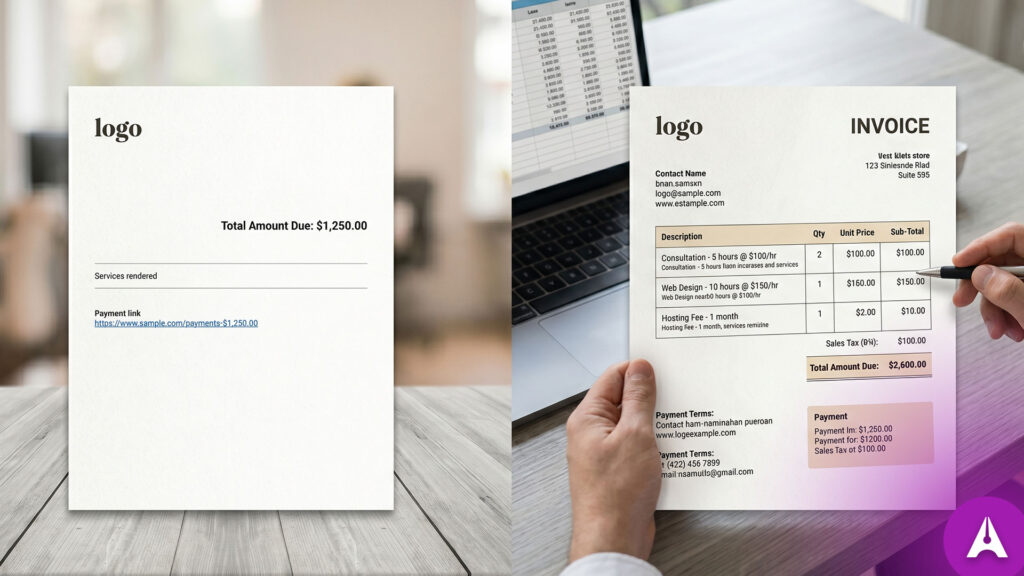
Line items are where invoices succeed or fail. Vague line items create questions. Questions create delays. Delays push you down the payment queue.
Compare these two approaches:
Vague:
- Design work — 14 hrs @ $95
Clear:
- Homepage redesign: wireframes and layout — 4 hrs @ $95
- Homepage redesign: visual design and asset creation — 6 hrs @ $95
- Homepage redesign: revision round and final handoff — 4 hrs @ $95
The second version tells the client exactly what they’re paying for. They already know about each of those items because they were part of the project. Seeing them on the invoice is confirmation, not surprise.
Task-level line items also protect you. If a client pushes back on a charge, a specific description is much harder to dispute than a generic one.
The best way to write good line items is to not write them at invoice time at all. Track your tasks throughout the project and let the invoice build itself from that record.
Payment Terms That Actually Work
Payment terms tell the client when you expect to be paid and what happens if they don’t.
Common terms:
- Due on receipt — payment is expected immediately. Best for project-based work with established clients.
- Net-7 — payment due within 7 days. Good for smaller invoices or fast-moving engagements.
- Net-15 — payment due within 15 days. A reasonable default for most freelancers.
- Net-30 — payment due within 30 days. Standard in corporate environments, but slow for independent freelancers.
Pick the shortest terms your clients will accept. Net-30 sounds professional, but it means you could finish work today and not see money for a month.
Include a late payment policy if you want one — something like 1.5% per month on overdue balances. Most clients never trigger it, but having it in writing signals that you take your payment terms seriously.
Net-30 terms start from when you invoice, not when you finish the work. Send the invoice late and you’ve extended your own payment terms for free.
How to Number Your Invoices
Use a consistent numbering system from day one. It keeps your records organized, looks professional, and matters for tax purposes.
Simple formats that work:
- Sequential: INV-001, INV-002, INV-003
- Year-based: 2026-001, 2026-002
- Client-based: SMITH-001, SMITH-002
Pick one and stick with it. Don’t restart numbering with each new client or each new year unless your accounting requires it. Consistent numbering makes it easy to find any invoice in your records and gives you a quick sense of your invoice volume over time.
Freelancers with consistent invoice numbering resolve billing disputes faster. When a client says ‘I don’t have that invoice,’ you can reference the number immediately.
Mistakes That Slow Down Payment
These are the most common invoice errors and what to do instead.
Sending to the wrong person. Always confirm the billing contact before you send. In larger companies, the person you work with is rarely the person who processes payments.
Missing payment instructions. Stating a total owing with no instruction on how to pay forces the client to ask. Include your bank details, PayPal, Stripe link, or whatever you accept — right on the invoice.
No due date. “Payment due on receipt” with no date is ambiguous. Put a specific date on every invoice: “Payment due June 15, 2026.”
Sending it late. Every day you wait after finishing the work, paying intent fades. Send the invoice the day you finish.
Rounding your hours. Billing 10 hours when you tracked 9.5 or 11.25 erodes trust if a client ever asks for a breakdown. Bill exactly what you tracked.
When to Send the Invoice
The day you finish the work. Not tomorrow. Not when you get around to writing it up. The same day.
Clients are most engaged with a project right after delivery. They’ve just received something, they’re pleased with it, and the budget is fresh in their minds. Send the invoice in that window and you’re not competing with other invoices, other priorities, or faded context.
If your project spans multiple weeks, consider milestone invoicing: send a portion of the invoice at a defined midpoint rather than holding everything until the end. It improves your cash flow and reduces the size of any payment dispute if one occurs.
The single best thing you can do to get paid faster is send the invoice the moment the work is done. Everything else is secondary.
The Invoice Is the Finish Line
Every hour you tracked, every task you completed, every revision you delivered — it all converges at the invoice. If the invoice is vague, you undermine the work. If it’s clear, specific, and sent promptly, it’s the professional close to a professional engagement.
Get good at invoicing and clients start to trust that working with you is easy. That trust compounds. It turns one project into a retainer, a referral, or a long-term relationship.
Aeto builds the invoice as you work, not after. Every task you complete on your board becomes a line item, with hours tracked and ready to bill. When the project ends, the invoice is already written. Start your free 30-day trial, no credit card required.